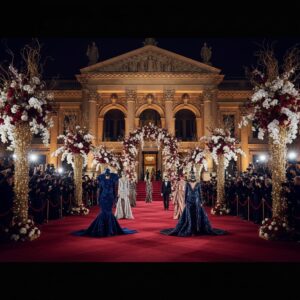
Quick answer: The red carpet is a ceremonial strip of red fabric rolled out to welcome important guests and mark prestigious events such as film premieres and award shows. It signals honor and status, provides a stage for arrivals and photography, and has become a global symbol of glamour and spectacle.
Before the awards are handed out or the film is screened, there is the walk. A strip of red fabric stretches from the street to the entrance, cameras flash, and the arrivals become an event in themselves. The red carpet is one of the most recognizable rituals in entertainment, yet the reasons behind it reach back far further than the world of premieres and award shows. Understanding it means looking at both its ancient roots and its modern purpose.
What is the red carpet?
At its simplest, the red carpet is a ceremonial walkway rolled out to welcome important guests and to mark an occasion as prestigious. In entertainment, it appears at film premieres, award ceremonies, festivals, and galas. Functionally, it does several things at once: it honors the arriving guests, creates a designated space for photography and interviews, and signals to the public that what follows is a significant event.
The carpet transforms an ordinary act, walking into a building, into a piece of theater. That transformation is the whole point. By formalizing the arrival, it turns guests into a spectacle and gives audiences, both present and watching from afar, a moment to anticipate.
Ancient origins
The idea of laying down a special path for honored figures is far older than cinema. References to ceremonial walkways for the important and the powerful appear in ancient stories and traditions, where rolling out a distinguished path was a way of showing reverence. Red in particular carried weight: the color was historically associated with celebration, importance, and prestige, partly because vivid red dye was once rare and expensive. Walking on such a path was a mark of exceptional status.
Over centuries, this custom persisted in various forms, from royal and religious ceremonies to formal welcomes for dignitaries. The through-line is consistent: a red walkway meant that the person using it was being honored.
How the modern tradition developed
The version most people picture today, tied to glamour and photography, took shape over the past century as the entertainment industry grew. As premieres and award ceremonies became major public events, the red carpet evolved into a stage for arrivals. Photographers and reporters gathered along it, and the walk became an opportunity for publicity as much as ceremony.
This is where the red carpet intersects with the machinery of fame. An arrival is a carefully managed moment, often coordinated by teams working behind the scenes. It provides a controlled setting where public figures can be seen and photographed, which is enormously valuable for promotion. In this sense, the carpet is closely related to other tools of visibility in entertainment, including the brief but memorable cameo appearances that generate buzz around a project.
What happens on the carpet
A red carpet event follows a recognizable rhythm. Guests arrive, walk the carpet, pause for photographs, and often give short interviews before heading inside. Each element serves a purpose:
- Arrivals: Guests enter in a visible, sequenced way that builds anticipation.
- Photography: Photographers capture images that circulate widely afterward.
- Interviews: Brief conversations give guests a chance to promote a project.
- Fashion display: Outfits become part of the event’s public story.
- Public viewing: Fans and audiences watch the arrivals as a spectacle.
The fashion element deserves special mention. Because the carpet is so heavily photographed, what guests wear becomes a talking point in its own right, discussed and remembered long after the event ends. The carpet is, in effect, a stage designed for maximum visibility.
The red carpet as a symbol
Beyond its practical uses, the red carpet has become a powerful metaphor. To roll out the red carpet for someone means to treat them with special honor, a phrase now used far outside entertainment. The image is instantly understood as shorthand for prestige, welcome, and importance.
| Aspect | What the red carpet represents |
|---|---|
| Historical role | Honoring dignitaries and the powerful |
| Entertainment role | Marking premieres and prestigious events |
| Publicity role | A managed stage for photos and promotion |
| Cultural symbol | Shorthand for glamour and special treatment |
Beyond entertainment
Although film and television made the red carpet famous, the tradition is not limited to show business. Red carpets appear at state occasions, official ceremonies, corporate launches, and other formal events. In each case, the underlying meaning is the same: this moment, and these guests, are being marked as important. The entertainment industry simply gave the tradition its most glamorous and widely photographed form.
Fame, image, and the carpet
The red carpet also reflects broader themes in how public reputation is built and displayed. It is a curated moment, one part of the larger effort to shape how figures are seen, an effort that includes everything from the demanding preparation behind serious performances such as immersive acting methods to ongoing conversations about access and privilege in the industry. Debates about who gets invited and how careers begin, sometimes discussed through the lens of the nepo baby phenomenon, remind us that the glamour of the carpet sits atop a complex system of relationships and opportunity.
The logistics behind the glamour
What looks effortless on camera is usually the product of careful planning. A major red carpet event involves scheduling arrivals so that guests appear in a deliberate order, positioning photographers and reporters, and managing crowds and security. Timing is tightly controlled, since the arrivals often need to finish before a screening or ceremony begins. Behind the barriers sit teams coordinating who speaks to which outlet and when.
This planning is why the red carpet functions so well as a publicity tool. It concentrates attention into a short, predictable window, giving photographers and journalists reliable access and giving guests a controlled environment in which to be seen. The spectacle that audiences enjoy is, in practice, a highly organized piece of event production.
Why the red carpet endures
The red carpet has survived from ancient ceremony into the streaming age because it satisfies a simple, lasting human impulse: the desire to mark certain moments and people as special. It gives events a sense of occasion, offers audiences a spectacle, and provides the industry a stage for visibility. A strip of red fabric may seem like a small thing, but its meaning, honor, arrival, and prestige, has proven remarkably durable across thousands of years.
Frequently asked questions
Why is the carpet red and not another color?
Red has long been associated with importance, celebration, and prestige across many cultures. Historically, red dye was costly and eye-catching, which reinforced its link to status. Over time the color became the traditional choice for welcoming honored guests, and that convention has simply endured into the modern era.
How old is the red carpet tradition?
The idea of a special walkway for honored figures is ancient, appearing in stories and ceremonies from long ago. The modern entertainment version, tied to premieres and award shows, developed over the past century. So while the specific glamour we picture today is relatively recent, the underlying custom is very old.
What actually happens on a red carpet?
Guests arrive and walk along the carpet while photographers capture images and reporters conduct brief interviews. It functions as a controlled space for arrivals, publicity, and public viewing before an event begins. The carpet essentially turns the act of entering a venue into a public spectacle.
Is the red carpet only used in entertainment?
No. Red carpets appear at many kinds of formal occasions, including state visits, ceremonies, and corporate events. The entertainment world made the red carpet famous, but the tradition of using one to honor guests extends well beyond film and television.
Why do red carpet outfits get so much attention?
Because the carpet is a highly photographed public stage, what people wear becomes part of the event’s story. Fashion choices are discussed, compared, and remembered, turning the arrivals into a cultural moment of their own. The attention reflects the carpet’s role as a place designed for visibility.