
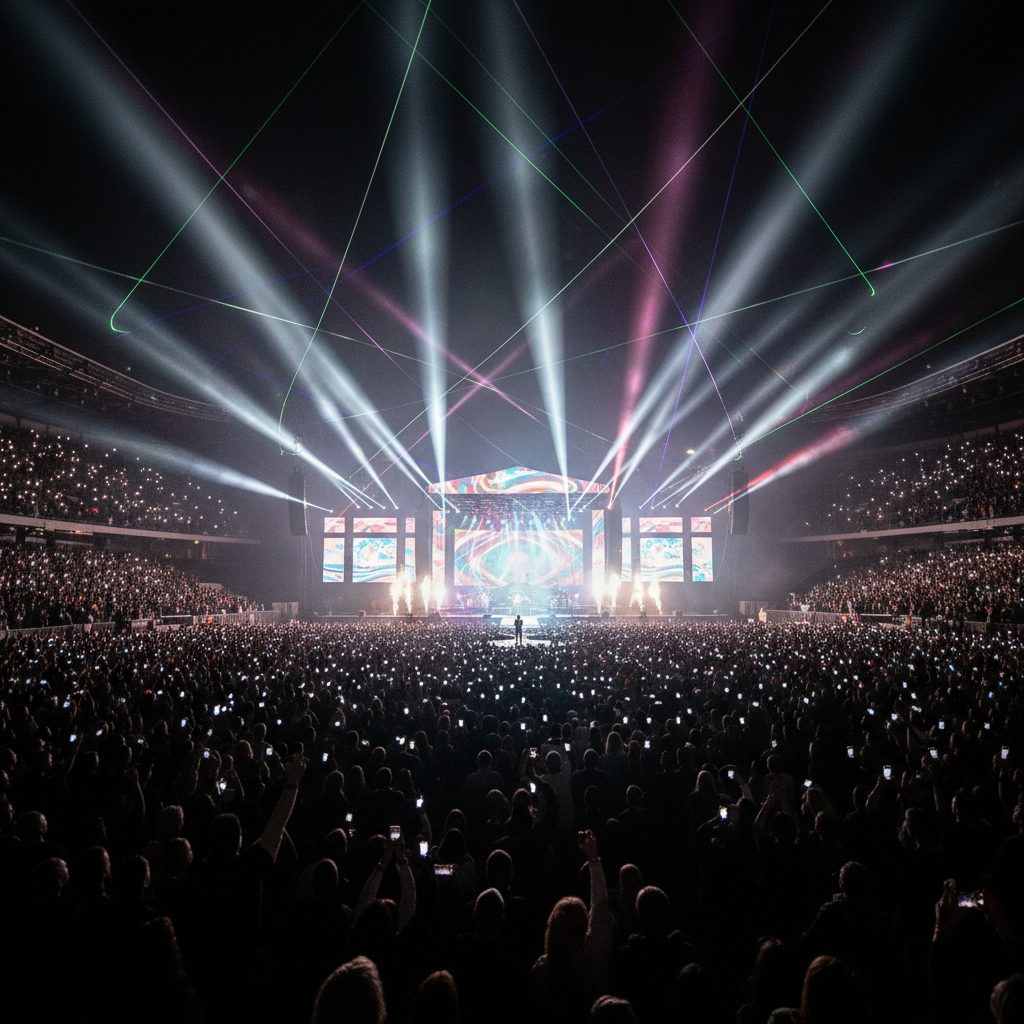
The highest-grossing tours in music history are more than just a list of impressive numbers — they are a window into the economics of modern live entertainment, where a single artist on the road can generate more revenue than most mid-sized companies turn over in a year. From sold-out stadium nights to merchandise lines that stretch around the block, the concert industry has transformed into a multi-billion-dollar machine driven by the world’s biggest stars.
Why Live Music Became the Biggest Business in Entertainment
For most of the twentieth century, record sales were the primary measure of an artist’s commercial power. Touring was considered secondary — a way to promote an album rather than an end in itself. That calculus shifted dramatically in the digital age. As streaming replaced physical sales and per-track revenue collapsed, artists and their management teams pivoted hard toward live performance as the dominant revenue engine.
The result has been a sustained boom in concert revenues. According to widely reported industry data, the global live music market has grown consistently year-on-year for more than a decade, with the biggest acts commanding ticket prices that would have seemed fantastical to earlier generations of fans. Premium seats, VIP packages, and resale markets have all pushed average ticket spend to record levels.
What Actually Makes a Tour “Highest-Grossing”
When the industry talks about a tour’s gross, it refers to the total face-value ticket revenue collected across all shows — not profit, and not what any one party actually takes home. Several factors determine where a tour lands in the all-time rankings:
- Number of shows played: More dates naturally mean more revenue, which is why multi-year global tours dominate the top spots.
- Venue capacity and fill rate: A sold-out stadium holds anywhere from 50,000 to over 100,000 people. Filling that night after night compounds fast.
- Average ticket price: Rising ticket prices, dynamic pricing, and VIP packages have inflated recent gross figures compared with older tours even when attendance is similar.
- Ancillary revenue: Merchandise, tour-branded products, and sponsorships add hundreds of millions of dollars on top of the gate.
The Eras That Redefined the Record Books
Several tours over the past three decades have genuinely rewritten what the industry thought was possible. In the 1990s and 2000s, acts like the Rolling Stones proved that longevity and catalogue depth could sustain years of touring at the highest level — their multi-year tours were widely reported as the first to cross the hundred-million-dollar threshold and then the quarter-billion mark.
The 2010s saw a new generation of artists push those numbers higher still. Acts built around immersive theatrical production — elaborate stages, visual storytelling, and synchronized lighting and video — gave fans a reason to pay premium prices for an experience they genuinely could not replicate at home. U2’s 360° Tour, for example, was widely cited as one of the highest-grossing of its era, built around a custom-engineered stage structure that traveled from city to city and became a spectacle in its own right.
More recently, pop’s biggest names have entered territory once occupied only by classic rock acts with decades of catalogue. Beyoncé‘s stadium tours have consistently broken single-show gross records, with her Renaissance World Tour widely reported as one of the highest-grossing tours by a solo female artist in history. The combination of devoted fanbase, theatrical production value, and savvy pricing strategies produced an economic event as much as a cultural one.
Equally transformative has been Taylor Swift‘s Eras Tour, which began in 2023 and extended across multiple years and continents. Widely reported as the first tour ever to gross over a billion dollars, the Eras Tour became a phenomenon that economists and journalists studied as much as music critics. Cities hosting shows reported measurable spikes in hotel bookings, restaurant revenue, and retail sales — a real-world economic footprint that turned each stop into a civic event.
The Economics Behind a Stadium Night
Understanding what goes into a single sold-out stadium show helps explain why even blockbuster gross figures leave narrower margins than outsiders assume.
The Revenue Side
A 70,000-capacity stadium at an average ticket price of $150 generates roughly $10.5 million in gate revenue for a single night. Multiply that by 50, 80, or 150 shows and the gross climbs fast. Add merchandise — which can generate millions per show for the biggest acts — and sponsorship deals tied to specific tour legs, and total receipts swell further.
The Cost Side
Production is extraordinarily expensive at stadium scale. Stage design, rigging, lighting rigs, video screens, and pyrotechnics require months of planning and millions in fabrication costs. Then there are the logistics: trucking hundreds of tonnes of equipment from city to city, housing and feeding a touring crew that can number in the hundreds, paying local venue fees, and meeting insurance requirements for events drawing tens of thousands of people. Local promoters take a share; ticketing platforms take fees; security, staffing, and permits add further costs at every stop.
Who Keeps What
The artist and their management negotiate deals with promoters — often major live entertainment companies — that specify how revenue is split above a certain threshold. The artist’s net after touring costs, management commissions, and deal structures is substantial for the biggest acts, but rarely as simple as “artist keeps the gross.”
Merchandise: The Hidden Billion
For the top-tier touring acts, merchandise revenue has become a near-equal partner to ticket sales. Tour-exclusive items — t-shirts, hoodies, hats, and increasingly elaborate collectible products — carry high margins and sell in volumes that reward artists who invest in thoughtful product design. Some acts have built merchandise businesses that operate year-round, not just during tour windows, turning a touring brand into a permanent retail presence.
The Eras Tour merchandise phenomenon attracted wide media coverage, with fans lining up for hours before shows specifically to purchase limited items. Secondary-market resale of sold-out tour merchandise further amplified the cultural signal around these products.
Dynamic Pricing and the Controversy Around It
One of the more contentious developments in modern touring economics is dynamic pricing — the practice of algorithmically adjusting ticket prices in real time based on demand, similar to airline or hotel pricing. Proponents argue it allows artists to capture value that would otherwise flow entirely to resellers. Critics argue it prices loyal, less-wealthy fans out of the market and damages the artist-fan relationship.
The debate became particularly heated around several high-profile on-sale events in recent years, when fans encountered prices far above face value even through official channels. Several artists have since publicly distanced themselves from aggressive dynamic pricing, while others have embraced it as a market correction. The tension between accessibility and revenue maximization is one that the industry has not resolved.
Global Touring and the New Revenue Geography
The highest-grossing tours of the current era are genuinely global operations in a way that older tours simply were not. Markets in Latin America, Asia, and Australia have matured to the point where a single stadium run in São Paulo or Melbourne can rival the revenue of several North American dates. Artists who make the logistical investment to tour these markets often find that local demand, built by years of streaming and social media presence, translates into sell-out runs with little traditional marketing required.
This geographic expansion has been one of the structural drivers of rising tour grosses — more markets, more shows, and audiences in those markets willing to pay prices comparable to North American and European standards.
What Comes After the Record
Each time a new tour sets a gross record, the question becomes whether the next cycle can surpass it. The economic logic of touring suggests that headline figures will continue to rise: ticket prices are still rising, touring markets are still expanding, and the biggest artists have larger, more globally distributed fanbases than ever before.
But there are constraints. Venue capacity is finite. Artist availability is finite — the physical demands of a multi-year stadium tour are substantial, and the biggest acts typically tour once every several years rather than continuously. And economic conditions can cool demand; in periods of high inflation or recession, discretionary spending on premium entertainment is among the first things households trim.
For a deeper dive into the celebrities behind these record-breaking tours, explore our music coverage and the full roster of celebrity profiles on PeopleOnTheNews.
Frequently Asked Questions
What is the highest-grossing concert tour of all time?
As of widely reported figures, Taylor Swift’s Eras Tour is broadly cited as the first tour ever to gross over one billion dollars, making it the highest-grossing concert tour on record. Several other tours — including those by the Rolling Stones, U2, and Beyoncé — rank among the all-time top earners.
How is a tour’s gross calculated?
Tour gross refers to the total face-value ticket revenue across all shows on a tour. It does not account for production costs, promoter splits, or ancillary revenue like merchandise. Industry bodies such as Pollstar track and publish these figures based on promoter reports.
Do artists actually keep all the money from their tours?
No. The gross figure is a top-line number. After production costs, promoter deals, management commissions, crew wages, venue fees, and logistical expenses, the net revenue to the artist is considerably lower — though still substantial for the biggest acts.
Why have ticket prices risen so much for major tours?
Rising ticket prices reflect several factors: the increased production scale of modern tours, the shift in artist revenue away from recorded music toward live performance, dynamic pricing practices, and strong consumer demand for live experiences from the biggest acts.
How does merchandise factor into a tour’s earnings?
Merchandise can add hundreds of millions of dollars to a tour’s total earnings for the biggest acts. Tour-exclusive items carry high margins and sell in large volumes, making merch a major secondary revenue stream that operates alongside ticket sales.
The Stage Is Set for More Records
The economics of touring have been reshaped fundamentally over the past two decades, turning the biggest concert tours into financial events of genuine scale. As the live music industry continues to grow — and as the next generation of arena and stadium acts builds its touring infrastructure — the record books will almost certainly be rewritten again. What stays constant is the basic human desire to be in a room with music and thousands of fellow fans: the irreplaceable quality that no streaming algorithm can replicate.